Wednesday, February 20, 2013
BOB1
I didn't really rank them in order from best to worst... but I don't like this method of grading.
Sara: Your lit terms had so much Harry Potter! I loved the David Tennant for incongruity!
Hayden: very up to date and I like your writing style, your thoughts are clear.
Ruth: I really liked how I could see the comments people have made, that makes things a lot simpler
Michelle: very simplistic and wordy
Justice: Your lit terms were in order, that's nice.
E'Ana: my computer froze twice when I tried to go to your blog, but it looked very tranquil from what I could see.
Landon: I like your facts of the day!
Beka: your voice is clear through your blog. I read the stuff in your voice.
Kathryn: I liked your blog, but mayyybe make the text a larger font? That would help my poor blind eyes a lot.
Kelli: Your blog has your style in it and you have a lot of interesting ideas.
Kasie: I like your remixes
Jenna: I liked you Sonnet, but maybe update a little more.
Owen: I liked your blog, and your Understanding Gertrude post was very intriguing.
Paul: update more
Ubi: your lite terms are fun and your blog gives off a very serious vibe to it.
Madison: Your blog was very bright and nice to look at and you're pretty well updated.
Josh: I like your back round and your quotes
Ryan: updated and I like your SOB post and your musica
Katelyn: very generic
Rocio: good lit terms and I liked your back round
Kayla: mostly updated and a lot of posts
Jackie: I like the back round music :)
Ryland: I like your back round and you're pretty up to date
Laura: updated and good thoughts through out your blog
Will: Fairly up to date
Jessica: needs to be updated more and overall a bit plain
Dylan: ......

I AM HERE
Please explain your progress in this course
during the first grading period. Have you made progress toward your
SMART goal? Have you begun thinking/working on your senior project, big
question, collaborative working group, or other endeavor/venture that
shows how you're putting this course to work for you? Document and
explain your performance.
Yes I've made significant progress in my smart goal and my senior project. My song for my senior project with Josh Montero is done and I'm going to be handling the music for SNL night. I am having to jolt myself out of this funk that I seem to have landed in, but we'll make it through won't we, my preccccioussssss? I want to get back on track. I do feel under a lot of pressure right now, so my English class has started to take a backseat. There's just soooooo much going on it's quite difficult to disperse my attention evenly.
Yes I've made significant progress in my smart goal and my senior project. My song for my senior project with Josh Montero is done and I'm going to be handling the music for SNL night. I am having to jolt myself out of this funk that I seem to have landed in, but we'll make it through won't we, my preccccioussssss? I want to get back on track. I do feel under a lot of pressure right now, so my English class has started to take a backseat. There's just soooooo much going on it's quite difficult to disperse my attention evenly.
Tuesday, February 12, 2013
Lit Terms 80-100
Omniscient Point of View: knowing all things, usually the third person.
Onomatopoeia: use of a word whose sound in some degree imitates or suggests its
meaning.
Oxymoron: a figure of speech in which two contradicting words or phrases are combined to produce a rhetorical effect by means of a concise paradox.
Pacing: rate of movement; tempo.
Parable: a story designed to convey some religious principle, moral lesson, or general truth.
Paradox: a statement apparently self-contradictory or absurd but really containing a possible truth; an opinion contrary to generally accepted ideas.
Parallelism: the principle in sentence structure that states elements of equal function should have equal form.
Parody: an imitation of mimicking of a composition or of the style of a well-known artist.
Pathos: the ability in literature to call forth feelings of pity, compassion, and/or sadness.
Pedantry: a display of learning for its own sake.
Personification: a figure of speech attributing human qualities to inanimate objects or abstract ideas.
Plot: a plan or scheme to accomplish a purpose.
Poignant: eliciting sorrow or sentiment.
Point of View: the attitude unifying any oral or written argumentation; in description, the physical point from which the observer views what he is describing.
Postmodernism: literature characterized by experimentation, irony, nontraditional forms, multiple meanings, playfulness and a blurred boundary between real and imaginary.
Prose: the ordinary form of spoken and written language; language that does not have a regular rhyme pattern.
Protagonist: the central character in a work of fiction; opposes antagonist.
Pun: play on words; the humorous use of a word emphasizing different meanings or applications.
Purpose: the intended result wished by an author.
Realism: writing about the ordinary aspects of life in a straightfoward manner to reflect life as it actually is.
Refrain: a phrase or verse recurring at intervals in a poem or song; chorus.
Requiem: any chant, dirge, hymn, or musical service for the dead.
Resolution: point in a literary work at which the chief dramatic complication is worked out; denouement.
Restatement: idea repeated for emphasis.
Rhetoric: use of language, both written and verbal in order to persuade.
Rhetorical Question: question suggesting its own answer or not requiring an answer; used in argument or persuasion.
Rising Action: plot build up, caused by conflict and complications, advancement towards climax.
Wednesday, January 30, 2013
Great Expectations
GENERAL
1. Briefly summarize the plot of the novel you read, and explain how the narrative fulfills the author's purpose (based on your well-informed interpretation of same).
A young orphan named Pip is taken in by his sister and her husband who is a blacksmith. Great Expectations is the story of how Pip grows up encountering many unforgettable people. Some good, some bad, and some dynamic, they all change the way Pip sees the world.
2. Succinctly describe the theme of the novel. Avoid cliches.
Dreams are but a step away from delusion... so is loyalty for that matter. Pip is so devoted to his childish view of the world that he comes close to never realizing his fallacy.
3. Describe the author's tone. Include a minimum of three excerpts that illustrate your point(s).
Dickens is always very descriptive when he writes. He uses imagery to relay what his characters are seeing at the time. A few examples of this are:
1) The convict coming out of the marshes. "... as if he were a pirate come to life, come down, and going back to hook himself up again. It gave me a terrible turn when I thought so; and as I saw the cattle lifting their heads to gaze at him , I wondered whether they thought so too." pg. 5
2) Upon describing a room in Satis House. "I crossed the staircase landing, and entered the room she indicated. From that room, too, the daylight was completely excluded, and it had an airless smell that was oppressive. A fire had been lately kindled in the damp old-fashioned grate, and it was more disposed to go out than to burn up, and the reluctant smoke which hung in the room seemed colder than the clearer air - like our own marsh mist." p. g71
3)Describing the Magwitch. "Moving the lamp as the man moved, I made out that he was substantially dressed, but roughly; like a voyager by sea. That he had long iron-grey hair. That his age was about sixty. That he was a muscular man, strong on his legs, and that he was browned and hardened by exposure to weather. As he ascended the last stair or two, and the light of my lamp included us both, I saw, with a stupid kind of amazement, that he was holding out both his hands to me." pg. 270
4. Describe a minimum of ten literary elements/techniques you observed that strengthened your understanding of the author's purpose, the text's theme and/or your sense of the tone. For each, please include textual support to help illustrate the point for your readers. (Please include edition and page numbers for easy reference.)
Foreshadowing: through out the story Magwitch's return is imminent. Why would Dickens have started the book with giving Pip such a strong impression of the convict?
Metaphor: The metaphor of the mists is resolved on the last page, "... as the morning mists had risen long ago when I first left the forge, so, the the evening mists were rising now." pg. 417
Motifs: the reoccuring doubles through out the novel are a way that Dickens shows how connected Pip's world is. For example, Magwitch and Miss. Havisham both want to shape a child to do their bidding in life. Magwitch makes Pip a gentleman and Havisham makes Estella a heart breaker.
Point of View: The whole story is told through Pip's eyes. "Herbert received me with open arms, and I had never felt before, so blessedly, what it is to have a friend." pg. 293
Foil: Orlick is a foil for Joe Gargery. Joe is kind and loves Pip, whereas Orlick is a spiteful slime ball who cripples Mrs. Joe and blames Pip for ruining his life.
Doppelganger: I would argue that Miss. Havisham is the ghostly figure of her former self. In this case she is her own haunted counter part.
Aphorism: "... life is made of ever so many partings welded together, as I may say, and one man’s a blacksmith, and one’s a white-smith, and one’s a goldsmith, and one’s a copper-smith. Divisions among such must come, and must be met as they come." pg. 192 Wise statements are given by different characters through out the story.
Imagery:"He looked in my young eyes as if he were eluding the hands of dead people, stretching up cautiously out of their graves , to get a twist upon his ankle and pull him in." pg. 5
Syntax: "... who appeared to have now become constitutionally green and yellow by reason of me." pg. 201
Allusion: The allusion to Shakespeare was in chapter 31 when Herbert and Pip attend Mr. Wopsle's Hamlet play. "The joy attended Mr. Wopsle through his struggle with Laertes on the brink of the orchestra and the grave." pg. 219
CHARACTERIZATION
1. Describe two examples of direct characterization and two examples of indirect characterization. Why does the author use both approaches, and to what end?
Direct:
1) Joe's blue eyes turned a little watery; he rubbed, first one of them, and then the other, in a most uncongenial and uncomfortable manner." pg. 39
2) "I found him to be a dry man, rather short of stature, with a square wooden face... " pg. 145
Indirect:
1) "That girl's hard and haughty and capricious to the last degree."Herbert to Pip about Estella pg150
2)"Is HE changed?" Miss Havisham asked her.
"Very much," said Estella, looking at me.
pg. 203 Estella describes Pip.
2. Does the author's syntax and/or diction change when s/he focuses on character? How? Example(s)?
Yes, Pip's dialogue changes through out the story as he becomes more and more educated, but Orlick was one whose diction and syntax were dramatically different from those of other characters. "... afore I kill you like any other beast -- I'll have a good look at you and a good goad at you. Oh, you enemy!" pg. 363
3. Is the protagonist static or dynamic? Flat or round? Explain.
Definitely dynamic, just like Magwitch, Herbert, and Estella Pip's character is formed as he grows up. A head-in-the-clouds child becomes a fully aware of himself adult.
4. After reading the book did you come away feeling like you'd met a person or read a character? Analyze one textual example that illustrates your reaction.
I felt as though Dickens exaggerated Pip's character in order to get his points across. I did feel like I had just read a character, but his mate Herbert was my favorite character, I felt like he could've been an actual person. "Herbert Pocket had a frank and easy way with him that was very taking. I had never seen any one then, and I have never seen any one since, who more strongly expressed to me, in every look and tone, a natural incapacity to do anything secret and mean. There was something wonderfully hopeful about his general air, and something that at the same time whispered to me that he would never be successful or rich. I don't know how this was."pg 151
AP LIT TERMS #31-56
Denouement: loose ends tied up in a story after the climax, closure, conclusion
Dialect: the language of a particular district, class or group of persons; the sounds, grammar, and diction employed by people distinguished from others.
Dialectics: formal debates usually over the nature of truth.
Dichotomy: split or break between two opposing things.
Diction: the style of speaking or writing as reflected in the choice and use of words.
Didactic: having to do with the transmission of information; education.
Dogmatic: rigid in beliefs and principles.
Elegy: a mournful, melancholy poem, especially a funeral song or lament for the dead, sometimes contains general reflections on death, often with a rural or pastoral setting.
Epic: a long narrative poem unified by a hero who reflects the customs, mores, and aspirations of his nation of race as he makes his way through legendary and historic exploits, usually over a long period of time (definition bordering on circumlocution).
Epigram: witty aphorism.
Epitaph: any brief inscription in prose or verse on a tombstone; a short formal poem of commemoration often a credo written by the person who wishes it to be on his tombstone.
Epithet: a short, descriptive name or phrase that may insult someone’s character, characteristics
Euphemism: the use of an indirect, mild or vague word or expression for one thought to be coarse, offensive, or blunt.
Evocative (evocation): a calling forth of memories and sensations; the suggestion or production through artistry and imagination of a sense of reality.
Exposition: beginning of a story that sets forth facts, ideas, and/or characters, in a detailed explanation.
Expressionism: movement in art, literature, and music consisting of unrealistic representation of an inner idea or feeling(s).
Fable: a short, simple story, usually with animals as characters, designed to teach a moral truth.
Fallacy: from Latin word “to deceive”, a false or misleading notion, belief, or argument; any kind of erroneous reasoning that makes arguments unsound.
Falling Action: part of the narrative or drama after the climax.
Farce: a boisterous comedy involving ludicrous action and dialogue.
Figurative Language: apt and imaginative language characterized by figures of speech (such as metaphor and simile).
Flashback: a narrative device that flashes back to prior events.
Foil: a person or thing that, by contrast, makes another seem better or more prominent.
Folk Tale: story passed on by word of mouth.
Foreshadowing: in fiction and drama, a device to prepare the reader for the outcome of the action; “planning” to make the outcome convincing, though not to give it away.
Free Verse: verse without conventional metrical pattern, with irregular pattern or no rhyme.
Genre: a category or class of artistic endeavor having a particular form, technique, or content.
Gothic Tale: a style in literature characterized by gloomy settings, violent or grotesque action, and a mood of decay, degeneration, and decadence.
Hyperbole: an exaggerated statement often used as a figure of speech or to prove a point.
Imagery: figures of speech or vivid description, conveying images through any of the senses.
Tuesday, January 29, 2013
Tale of Two Cities ARNs
Dickens: A Tale of Two Cities - Dr Tony Williams - Gresham College Lectures
Actually, 3 cities:---->
London, Paris, and Manchester
Preface --> it had a close connection to Dickens himself
In 1857 Charles helped write a play called The Frozen Deep. This ended up having a close connection with To2Cs.
-Dickens later met the Turnons and fell in love with their daughter Ellen.
Lucie is Ellen
-Sidney Carton: talented man who sacrifices himself for the woman he loved
----->Double sets of characters (double faces)
pnt of crisis 1857
-marriage was rough, Little Dorit had been published.
-he profited from public readings + became very popular
Jun 1858 was when he made it official that he had separated from his wife, starting journals that could be profited from
---London
---Dickens was brought there as a boy
---he saw many unsettling sights
---he described the city as his magic lantern
---a city of extremes
---Paris
---extraordinary to dickens
---city had its own lively character
---every person he walked past inspired him
---900,000 people in the city at the time
---1850s-60s changed the city a lot, but Dickens described the old parts that had been changed
---1844-1868 he visited paris 15 times
---Vibrant, modernizing city
Dickens had the attraction of repulsion and an eye for detail.
The two worlds of London and Paris are alike in many ways
Dickens didn't like to rebel, but everyone feared that the french revolution ideas would come to England.
#cliffhangers
Dickens was very happy with To2Cs
1860 was the first time the book had been made into a play.
He built up suspense even though we know how the history resolved itself.
Dickens and friend Carlyle were great mates
He builds and builds the emotions of the surroundings. We ride this wave of description that Dickens creates for us.
People are mysteries to other people.
Actually, 3 cities:---->
London, Paris, and Manchester
Preface --> it had a close connection to Dickens himself
In 1857 Charles helped write a play called The Frozen Deep. This ended up having a close connection with To2Cs.
-Dickens later met the Turnons and fell in love with their daughter Ellen.
Lucie is Ellen
-Sidney Carton: talented man who sacrifices himself for the woman he loved
----->Double sets of characters (double faces)
pnt of crisis 1857
-marriage was rough, Little Dorit had been published.
-he profited from public readings + became very popular
Jun 1858 was when he made it official that he had separated from his wife, starting journals that could be profited from
---London
---Dickens was brought there as a boy
---he saw many unsettling sights
---he described the city as his magic lantern
---a city of extremes
---Paris
---extraordinary to dickens
---city had its own lively character
---every person he walked past inspired him
---900,000 people in the city at the time
---1850s-60s changed the city a lot, but Dickens described the old parts that had been changed
---1844-1868 he visited paris 15 times
---Vibrant, modernizing city
Dickens had the attraction of repulsion and an eye for detail.
The two worlds of London and Paris are alike in many ways
"best of times"
"worst of times"
With his opening he takes us back to the time. The story takes place between 1757-1794.Dickens didn't like to rebel, but everyone feared that the french revolution ideas would come to England.
#cliffhangers
Dickens was very happy with To2Cs
1860 was the first time the book had been made into a play.
He built up suspense even though we know how the history resolved itself.
Dickens and friend Carlyle were great mates
He builds and builds the emotions of the surroundings. We ride this wave of description that Dickens creates for us.
People are mysteries to other people.
Tuesday, January 22, 2013
AP Lit Terms #1-30
1) Allegory: a tale in prose or verse in which characters, actions, or settings represent abstract ideas or moral qualities; a story that uses symbols to make a point
Alliteration: the repetition of similar initial sounds, usually consonants, in a group of words
Allusion: a reference to a person, a place, an event, or a literary work that a writer expects a reader to recognize
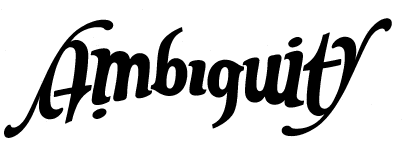
Ambiguity: something uncertain as to interpretation


Analysis: a method in which a work or idea is separated into its parts, and those parts given rigorous and detailed scrutiny

Anaphora: a device or repetition in which a word or words are repeated at the beginning of two or more lines, phrases, clauses, or sentences

Anecdote: a very short story used to illustrate a point

Antagonist: a person or force opposing the protagonist in a drama or narrative
Scar, Loki, Joker, Hotspur, etc.
Antithesis: a balancing of one term against another for emphasis or stylistic effectiveness

Aphorism: a terse, pointed statement expressing some wise or clever observation about life
"Know thyself?" If I knew myself I would run away.
Apologia: a defense or justification for some doctrine, piece of writing, cause, or action; also apology

Apostrophe: a figure of speech in which an absent or dead person, an abstract quality, or something inanimate or nonhuman is addressed directly

Argument(ation): the process of convincing a reader by proving either the truth or the falsity of an idea or proposition; also, the thesis or proposition itself
Your mother was a hamster and you father smelt of elderberries!
You lie!
No I don't!
Yes you do!
Assumption: the act of supposing, or taking for granted that a thing is true

Audience: the intended listener or listeners

Characterization: the means by which a writer reveals a character’s personality

Chiasmus: a reversal in the order off words so that the second half of a statement balances the first half in inverted word order

Circumlocution: a roundabout or evasive speech or writing, in which many words are used but a few would have served

Classicism: art, literature, and music reflecting the principles of ancient Greece and Rome: tradition, reason, clarity, order, and balance

Cliché: a phrase or situation overused within society
"Go home, Sarah. You're drunk."
"I just tripped over a backpack, it's a perfectly clumsy yet normal thing to do!"
Climax: the decisive point in a narrative or drama; the pint of greatest intensity or interest at which plot question is answered or resolved

Colloquialism: folksy speech, slang words or phrases usually used in informal conversation

Comedy: originally a nondramatic literary piece of work that was marked by a happy ending; now a term to describe a ludicrous, farcical, or amusing event designed provide enjoyment or produce smiles and laughter
hahahhahhaaaa. Ehehehhehehehhe! Mwahahhahahahahahaha!
Conflict: struggle or problem in a story causing tension
I can't find my bull dosser. Me thinks it must have dozed off in yonder forest. Get it? Get it? ha.
Connotation: implicit meaning, going beyond dictionary definition

Contrast: a rhetorical device by which one element (idea or object) is thrown into opposition to another for the sake of emphasis or clarity

Denotation: plain dictionary definition
Denotation: plain dictionary definition
Ambiguity: something uncertain as to interpretation
Anachronism: something that shows up in the wrong place or the wrong time
A TROLL FACE
Analogy: a comparison made between two things to show the similarities between them
Analysis: a method in which a work or idea is separated into its parts, and those parts given rigorous and detailed scrutiny

Anaphora: a device or repetition in which a word or words are repeated at the beginning of two or more lines, phrases, clauses, or sentences
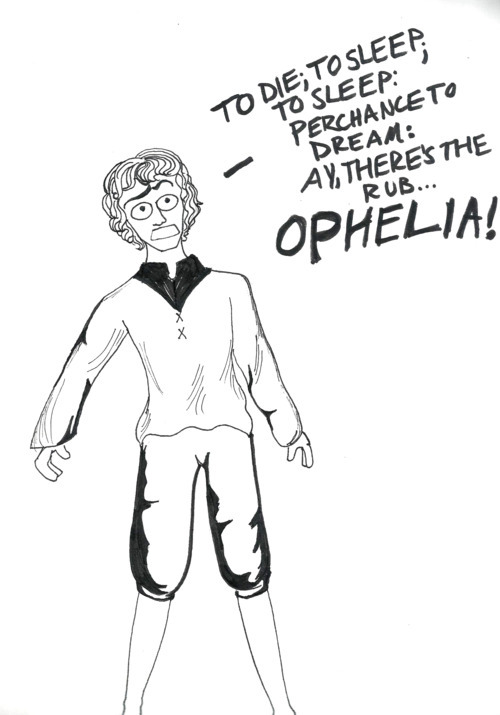
Anecdote: a very short story used to illustrate a point
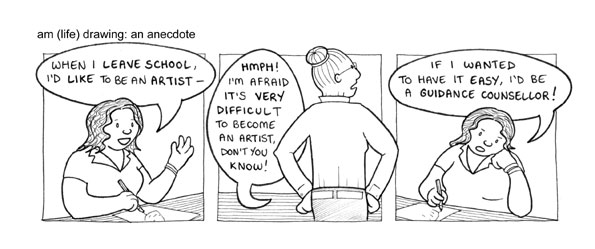
Antagonist: a person or force opposing the protagonist in a drama or narrative
Scar, Loki, Joker, Hotspur, etc.
Antithesis: a balancing of one term against another for emphasis or stylistic effectiveness

Aphorism: a terse, pointed statement expressing some wise or clever observation about life
"Know thyself?" If I knew myself I would run away.
Apologia: a defense or justification for some doctrine, piece of writing, cause, or action; also apology

Apostrophe: a figure of speech in which an absent or dead person, an abstract quality, or something inanimate or nonhuman is addressed directly

Argument(ation): the process of convincing a reader by proving either the truth or the falsity of an idea or proposition; also, the thesis or proposition itself
Your mother was a hamster and you father smelt of elderberries!
You lie!
No I don't!
Yes you do!
Assumption: the act of supposing, or taking for granted that a thing is true

Audience: the intended listener or listeners

Characterization: the means by which a writer reveals a character’s personality

Chiasmus: a reversal in the order off words so that the second half of a statement balances the first half in inverted word order

Circumlocution: a roundabout or evasive speech or writing, in which many words are used but a few would have served

Classicism: art, literature, and music reflecting the principles of ancient Greece and Rome: tradition, reason, clarity, order, and balance
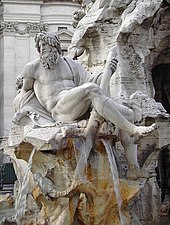
Cliché: a phrase or situation overused within society
"Go home, Sarah. You're drunk."
"I just tripped over a backpack, it's a perfectly clumsy yet normal thing to do!"
Climax: the decisive point in a narrative or drama; the pint of greatest intensity or interest at which plot question is answered or resolved

Colloquialism: folksy speech, slang words or phrases usually used in informal conversation

Comedy: originally a nondramatic literary piece of work that was marked by a happy ending; now a term to describe a ludicrous, farcical, or amusing event designed provide enjoyment or produce smiles and laughter
hahahhahhaaaa. Ehehehhehehehhe! Mwahahhahahahahahaha!
Conflict: struggle or problem in a story causing tension
I can't find my bull dosser. Me thinks it must have dozed off in yonder forest. Get it? Get it? ha.
Connotation: implicit meaning, going beyond dictionary definition

Contrast: a rhetorical device by which one element (idea or object) is thrown into opposition to another for the sake of emphasis or clarity

Denotation: plain dictionary definition
Denotation: plain dictionary definition
Subscribe to:
Posts (Atom)